Megan M. Paris, PhD
Dr. Megan Paris
Licensed Psychologist

713-568-5709
[email protected]
  • Welcome
  • About Me
  • Services & Fees
  • FAQs
  • Contact
  • Directions & Parking

Understanding and Supporting a Loved One with Mental Illness

5/10/2013

0 Comments

 
I had the privilege to serve as a speaker during a national women's leadership conference. We had a lively discussion about how to offer support to loved ones with mental illness, as well as challenges of stigma, misconceptions, and importance of seeking help when needed. This post shares some key points from this discussion. The next post will follow up with additional resources available nationwide.

Picture
WHAT IS MENTAL ILLNESS?
Disorder characterized by psychological symptoms, abnormal behaviors, impairment in
functioning, or any combination of these, that causes significant distress and impairment 
    --Some examples include Schizophrenia, Bipolar, Depression,  Anxiety, Substance     
        Abuse/Dependence, Dementia 

WHO IS AFFECTED BY MENTAL ILLNESS?
 
Almost everyone’s life is touched by mental or emotional problems.
     --One in 4 adults and 1 in 10 children experience a mental health disorder in a given year. 
     --Major depressive disorder affects 6.7% of adults & is the leading cause of disability in US.
     --Anxiety disorders affect 18.7% of adults & frequently co-occur with depression or addiction 
       disorders.
     --Less than 1/3rd of adults and ½ of children with mental disorder receive mental health 
       services each year.
 
FIGHTING STIGMA:
Create environment of strengths and promote understanding with “people-first” language.
         --Don’t label people as crazy, wacko, loony.           
         --Don’t say someone is a schizophrenic but s/he has schizophrenia.
               
 
        --Instead of an autistic child, say a child with autism.

A person is so much more than their illness or label. Help make that distinction.

CHALLENGING COMMON MYTHS WITH THE FACTS:
Unfortunate myths and misperceptions abound when it comes to mental illness and emotional concerns.

Myth: Mental illness is due to personal failure, weakness, or a character flaw.
Fact: Mental illnesses result from the interaction of biological, psychological, and social factors. Events like loss of a loved one or a job can also contribute to the development of various mental health problems. People aren’t weak; in fact, it takes courage to confront problems and seek help.
 
Myth:
Children don't experience mental illnesses. Acting out is just a product of bad parenting and seeking attention.
Fact: Just like adults, kids experience clinically diagnosable mental health conditions from the interaction of biological, psychological, and social factors. Behavior problems can be symptoms of mental problems, rather than merely attention-seeking devices. Kids can succeed in school with appropriate understanding, support, and mental health services.
 
Myth: Addiction is a lifestyle choice and shows lack of willpower.
Fact: Addiction is a disease generally resulting from changes in brain chemistry. Nothing to do with being a “bad” person.
 
Myth:
People with mental illnesses are violent and unpredictable.
Fact: Actually, the vast majority of people with mental health conditions are no more violent
than anyone else. People with mental illnesses are much more likely to be the
victims of crime. 
 
Myth:  Once people develop mental illnesses, they will never recover. Therapy and self-help are a waste of time.
Fact: Studies show that most people with mental illnesses get better, and many recover completely. Treatment varies depending on the individual, but working with trained professionals during the recovery process can be effective. Therapy is often combined with some of the most advanced medications available.
 
 
HOW TO SUPPORT LOVED ONES
1. Educate yourself about the illness. Seek out resources.
2. Offer practical help and emotional support.
3. Have realistic expectations.
4. Be available to work closely with a treatment team, but let your loved one have control.
5. Set appropriate limits or boundaries.
6. Recognize your loved one’s courage, convey hope, and don’t judge.
7. Be an advocate. Get political.
8. Take care of yourself.

HOW TO COPE
1. Accept your feelings.
2. Establish a support network.
3. Seek counseling.
4. Take time out.

References:
        
www.mindframe-media.info
        http://psychcentral.com/lib/2011/15-ways-to-support-a-loved-one-with-serious-mental-illness/all/1/
        www.samsha.gov

0 Comments

Quotable Thought for April

4/26/2013

1 Comment


          Daring as it is to investigate the unknown, even more so is it to question the known.
                    --Kaspar

1 Comment

A Peek Inside Couples Counseling

4/12/2013

0 Comments

 
Partners often share that long-term stress and conflict dampens their connection and can
make it tough to remember what brought them together. Counseling is a place where couples can safely explore feelings, process reactions, and have a mediated forum to identify patterns and learn productive, healthy ways of relating. We often find that little tweaks and adjustments to a couple’s habits have a profound effect on improving their relationship satisfaction. 
 
Some people think the idea of couples counseling sounds about as enjoyable as getting a root canal at the dentist. However, many find that the process of working with their partners and a trained therapist can be meaningful, rewarding, and even…fun! Yes! There’s been so much great research about couples’ interactions and helpful tools that couples counseling is more exciting than ever! 
 
For example, Dr. John Gottman is a psychologist whose research helps couples create healthy, happy relationships that last. After years of research on marital behavior and communication dynamics, Dr. Gottman says that he can reliably predict if a couple will divorce with 91% accuracy by watching and listening to them for just five minutes. Wow.
Picture

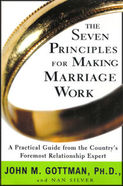
Dr. Gottman has a great book called, The Seven Principles for Making Marriage Work (1999). He says, “What can make a marriage work is surprisingly simple. Happily married couples aren’t smarter, richer, or more psychologically astute than others. But in their day-to-day lives, they have hit upon a dynamic that keeps their negative thoughts and feelings about the other (which all couples have) from overwhelming their positive ones.”

He lays out some ways of relating that can be so negative that if allowed to continue over time may be "lethal" to a relationship. These types of negative communications become important in counseling sessions to help couples recognize and squash:

1) Complaint vs. Criticism
      Complaint: points out specific actions of partner's failure to do something 
      "I'm angry you didn't sweep the kitchen floor last night. We agreed to take turns."

      Criticism: more global negative comment about your partner's character or personality 
      "Why are you so forgetful? I hate sweeping when it's your turn. You just don't care."    
          (Turn any complaint into criticism by adding "What's wrong with you!?")

     
Problem: Can be very common, but paves the way for harsher, more destructive 
      communication.
 
2) Contempt
      Sarcasm, cynicism, name calling, eye-rolling, mockery
 
       Problem:
Dangerous because it often conveys disgust and may lead to more
      
conflict rather than resolution.
 
3) Defensiveness

      Although this reaction is often understandable when one or both partners are hurt by some
      of the harmful ways of interacting above, being defensive rarely has the desired effect; for
      example, your partner does not back down or apologize. 
 
       This can in fact escalate conflict and is really a way of blaming your partner. 
            "The problem isn't me, it's you!"
 
     
Problem: Discussions that begin harshly, where criticism and contempt lead to 
     
defensiveness, which then leads to more contempt and more defensiveness, eventually one
      partner may tune out completely.

 
4) Stonewalling
      Coming home from work and beginning conflict at home, one partner may turn away and 
      become unresponsive, leave the room. The less responsive one is, the more the other may
      yell. By turning away, this interaction is as though one is sitting like a passive stone wall. The
      partner acts like he or she couldn't care less about what you're saying, even if he or she
      hears it.
0 Comments

Quotable Thought for March

3/29/2013

0 Comments

 
I like to share quotes that I find meaningful, humorous, or thought-provoking. Here’s one for March: 
 
           And the trouble is, if you don’t risk anything, you risk even more.
                 --Erica Jong


This quote strikes me as so true. It seems timely based on how often this month I’ve found myself discussing change. We all experience fear sometimes; fear of change, fear of failure, and fear of loss often keep us from acting or trying things that can lead to happiness, improved well-being, or a sense of success. Sometimes the only thing holding us back is our own fear of taking a risk. Risks can be scary, but what might you be missing by playing it safe or holding back?
0 Comments

Body Responses: Stress vs. Relaxation

3/15/2013

1 Comment

 
Stress is an unavoidable part of everyday life, resulting from any change or situation you must cope with, both positive and negative. In fact, the body may react to the physical threat of danger in the same way it responds to the exhilaration of upcoming wedding or dream vacation. Sound strange? Well, not all stress is bad, but problems can arise when the amount of stress you experience over time exceeds your resources to cope. What’s important is to learning to recognize the signs of stress to respond in a healthy way so it doesn’t interfere with your life. 
 
Your body notices stress long before your mind does. Think about the last time you felt stressed out. Did you notice any of these common feelings?
Fatigue
Muscle Tension
Racing Heart
Shakiness
Sweating
Nail biting
Dry Mouth
Sleep problems
Heartburn
Jitters
Irritability
Overeating or Loss of appetite
Physiological changes during stress are truly remarkable. In fact, scientists call these reactions the “fight or flight response;” a series of biochemical changes in the body that prepare an individual to deal with threats or danger. Any problem we face, imagined or real, can cause the mind to signal an alarm that stimulates the sympathetic nervous system to make changes in the body. Imagine a zebra standing in the sun, who suddenly notices a lion approaching. The zebra needs to react immediately to survive. His body must be in optimal shape for the burst of energy required to flee to safety. It is adaptive for the stress response to kick into gear so the zebra can survive.
Picture
Just like the zebra, our bodies react in the same way to threats and stressors: muscles tense, pupils become larger, hearing becomes more acute, blood surges to the brain and trunk and away from extremities. The body quickly gears up to peak efficiency to cope with the current threat and then, when the perceived crisis is over, the body returns to its normal state of functioning. Unfortunately, many of us live with so many repeated stressors that the body doesn’t always automatically calm down on its own. This is when chronic stress and burn out become a problem; the body wasn’t designed to linger too long in“fight or flight” mode.
 
Fortunately, the same signal that turns on fight or flight can also turn it off. Instead of maintaining the stress response, the relaxation response is naturally restorative. Metabolism, heart rate, breathing rate, muscle tension, and blood pressure all return to their normal levels. Consider the fact that it is physically impossible to breath quickly and slowly at the same time. Stress and relaxation are simply not compatible. One response cannot exist simultaneously with the other. Training the mind and body to enter a state of relaxation, to invite the relaxation response, leads to a reduction in physiological symptoms and is the key to managing and reducing negative outcomes of stress. 
 
Learning relaxation techniques like deep breathing, progressive muscle relaxation, autogenics, meditation, imagery, and so on, provides the body with the steps to achieve the relaxation response. As with most skills, the more practice and experience you have, the easier it will become for you to tap into physiological and emotional. Stay tuned for upcoming posts with more information and examples of each of these techniques!
1 Comment

How 'looking on the bright side' actually helps... 

3/8/2013

0 Comments

 
Picture
What if I told you most people have a tendency to focus on what’s going wrong; to think more about negative details and analyze problems? Well, research has shown just that, especially when people already feeling down or depressed. In turn, this negative focus often makes depression worse. However, people who spend more time focusing on positives, often feel better. So those who look on the bright side and see the glass half full or are on to something.

The “mental filter” is a term from cognitive psychology to describe people’s tendency to focus on the negatives while filtering out or ignoring all the positives. People often pay attention to the one thing that went wrong, rather than all the things that went right.

Consider this example: Tony walks through the crowded grocery store. People are courteous, and a few smile at him as they pass in the aisles. An employee even offers to carry out his bags. Then, as Tony walks across the parking lot, a driver honks impatiently at him. He thinks, “People are always so rude” and focuses on his anger during his entire drive home. By the time he pulls into the driveway, he’s tired and cranky, and snaps at his roommate. This type of filter for negative thinking contributes to bad feelings and can maintain depression. 
  
Instead, by removing the filter and consciously acknowledging what goes right, people often feel less depressed, and have a greater sense of overall well-being. Imagine if Tony had focused more on the friendly smiles, courteous people, and helpful employees. He may have felt calmer,
kinder, and have been less likely to snap at his roommate.

Here’s another example: on days when Amy feels feeling particularly tired or stressed, her mental filter goes into action during a jog. Thoughts like, “I hate running. This stinks! I’m so tired, bored, cold, irritated, [insert assortment of other negative feelings here].” This negativity inevitably leads to concentrating on her physical discomfort, a growing negativity about the experience, and focusing on how awfully long the trail is. By allowing the mind to dwell on these
feelings, it’s less likely that she would be willing to hit the trail the next time. Instead, Amy uses the opportunity to actively focus on the positive, turn on her “positive filter”and practice gratitude. As her feet pound against the earth, she reviews what she’s grateful for during the run. “I’m so fortunate to have a healthy body and the ability to run. I appreciate my beating heart, full lungs, the muscles and bones that carry me along. It’s a privilege to have this free time to spend  outside.” With this conscious practice, her gratitude grows, and she more consistently finds herself appreciating the experience and ends the run feeling refreshed.

I encourage you to consider these examples the next time you find yourself stressed out in a similar situation and challenge yourself to refocus on the positives. If you want to go a step  further, consider trying the “Three Blessing Exercise” to boost your positive outlook. Every night for the next week, before you go to bed, write down three things that went well during the day. Your items don’t need to be grand or significant (though they can be); they may be as simple as a beautiful song you heard on the radio or a smile from a coworker. This practice draws your attention toward the positive, helping to balance out some of the negative filtering that may have happened during your day. Even severely depressed people can find three things that went well every day, and when they do, their depressed mood may start to lift. In fact, a study by Martin Seligman found 92% of people who counted their blessings for one week felt happier and 94% of people who said they were depressed actually reported feeling less depressed. Maybe this week, you can focus on the positives, see your glass half full, look on the bright side, and embrace gratitude! Challenge your negative filter. Go for it!
0 Comments

Tossing & Turning? 10 Tips for a Good Night’s Rest

2/28/2013

0 Comments

 
Picture
www.prweb.com
What happens when it’s time for bed but your mind is racing, going over everything that happened today and everything that needs to happen tomorrow? Or maybe you simply stare at the ceiling, calm but still awake. You’re not alone. Millions of people aren’t getting enough sleep, yet it is essential to maintain physical and emotional health.

As a psychologist, I often work with people who have struggled a long time and think good sleep is an unattainable goal. However, with a few simple adjustments in their routine and attitude about bedtime, many people notice drastic improvements! Read on for 10 simple tricks to help you get the sleep you need. 
 
1) If you can’t sleep, get out of  bed
If after 15-20 minutes you’re not asleep, get up and do something boring (not in bed; avoid bright lights, avoid noises—these wake you up). Return to bed only when you’re sleepy. Keep doing this until you fall asleep. You want to break the cycle of lying in bed, worrying, and trying to fall asleep.

2) Use the bed only for sleeping or sex
No watching TV, work, or reading. Make sure the bedroom is dark, quiet, and at a comfortable temperature (cooler is better). You’re training yourself that bed is only for sleep or sex.

3) Get up at the same time every day
Get up at the same time, even if you’re tired, even on weekends. An irregular schedule contributes to insomnia. You want to train your body to have a normal, healthy, sleep pattern.

4) Use sunlight to set your biological clock
As soon as you get up in the morning, go outside and have your face in sunlight for 15 minutes. Better yet, start an activity like a brisk walk or jog. Fido would love to join you!

5) Unwind for an hour before going to bed
You can’t be going 100 miles an hour and then suddenly fall asleep. Develop a nightly unwinding ritual (warm bath 90 minutes before bed, light snack, caffeine-free tea, or a few minutes of reading in your favorite chair).

6) Keep a notebook by your bed
This is one of my favorite tips. Maybe you have a hard time quieting your mind and find yourself stressing over events from the day, things you need to do tomorrow, upcoming appointments, etc. Take a minute to write those loose ends and “to-do’s” on paper. Then, give yourself permission to put those thoughts aside and relax. The list will be there when you wake up.

7) Relax in bed
Use techniques like muscle relaxation, deep breathing, and imagery while waiting to fall asleep. With a little practice, you may find it’s just the thing to help you drift off to sleep.

8) Don’t watch the clock
Clock-watching feeds the worrying cycle that keeps you awake. Don’t allow yourself to stare at the clock or periodically check the time and stress over still being awake. The less pressure you put on yourself to fall asleep quickly, the better.

9) Nix the chemicals
While sleep aides might be helpful short-term, many experts suggest eliminating alcohol, sleeping pills, and illegal drugs. Avoid or eliminate cigarettes and caffeine (especially within six hours of bedtime). 

10) No naps
Really. Try not to sleep during the day, even if you’re really tired. This will help you be tired at night and regulate your schedule. If you HAVE TO nap, make it less than 1 hour, and as early in the day as possible.

Talk  with your therapist and your medical provider if sleep continues to elude you. Check out the National Sleep Foundation (
www.sleepfoundation.org) and American Academy of Sleep Medicine (www.sleepeducation.com) for more information and tons of additional  resources.

0 Comments
Forward>>

    On the Mind...

    Welcome to my blog offering information and thoughts on a variety of psychology topics and common concerns.

    Author

    Picture
    Megan M. Paris, PhD


    I'm a licensed psychologist in Houston helping adults
    work through life's challenges. I provide an objective and nonjudgmental space to explore your situation and improve your overall
    well-being. 

    Click
    here to learn more about my practice.

    Archives

    September 2013
    August 2013
    July 2013
    June 2013
    May 2013
    April 2013
    March 2013
    February 2013

    Categories

    All
    Healthy Lifestyles
    Psychology Perspectives
    Quotes Of The Month
    Relaxation Training

    RSS Feed

Powered by Create your own unique website with customizable templates.